
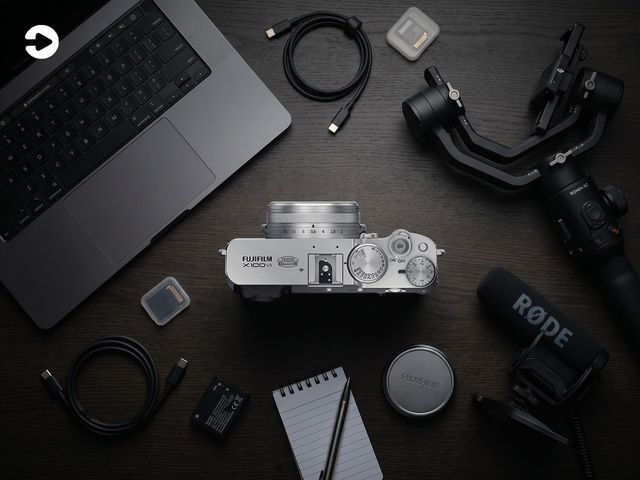
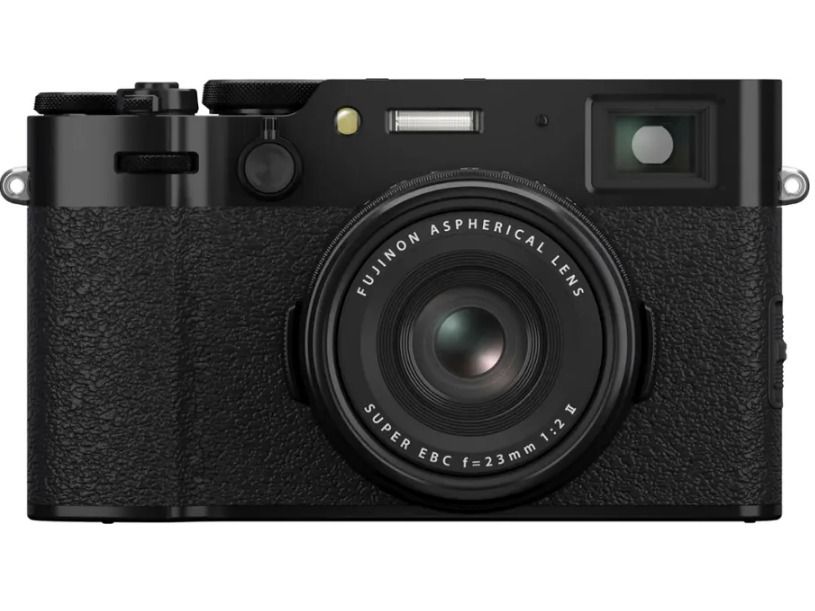
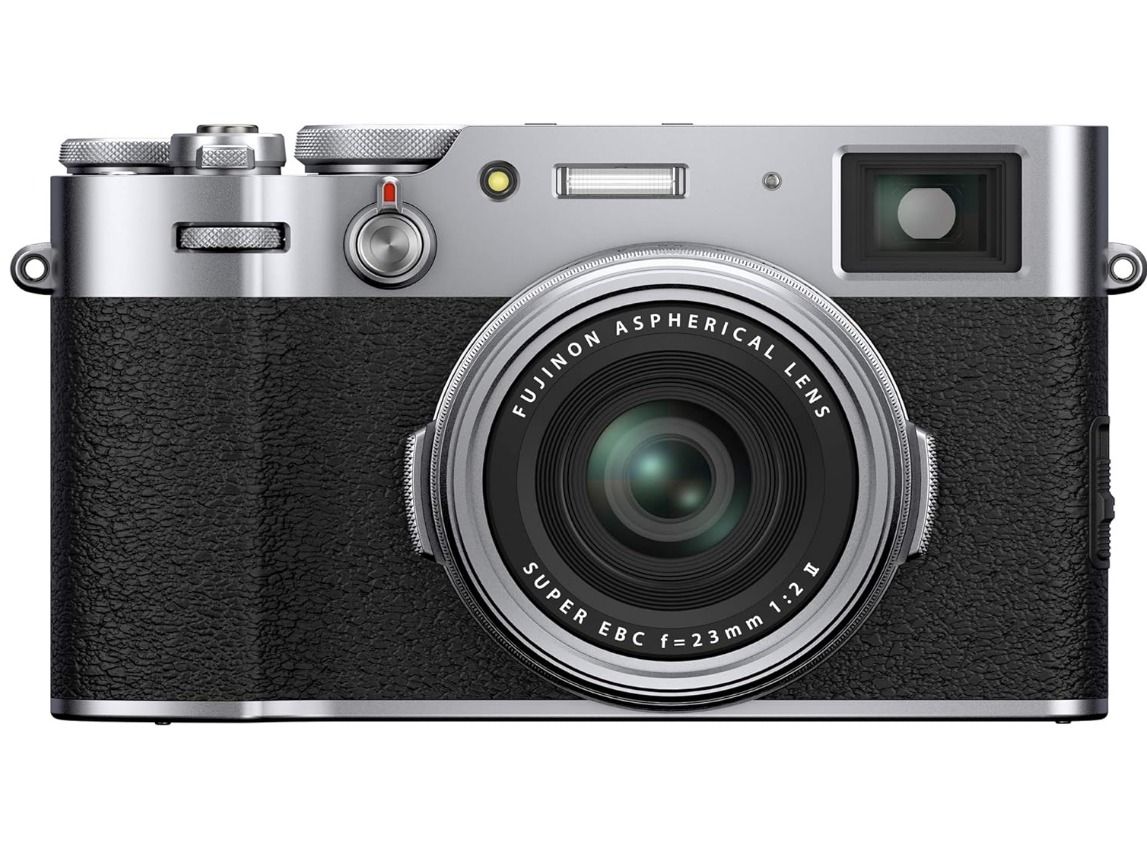
The Fujifilm X100VI is a fixed-lens compact camera with a 40MP APS-C sensor, a 23mm f/2 lens and Fujifilm's hybrid optical and electronic viewfinder. It launched in February 2024, and it is still the camera people ask about most. It is also still one of the hardest to find at list price.
This review covers what the camera does well, where it falls short, and the questions owners raise again and again in forums and threads. The aim is simple: help you decide whether this is the right premium compact camera for you before you spend time hunting for one.
“The short answer. Buy it if you want one small camera with a single 35mm-equivalent view, lovely straight-from-camera color and a viewfinder you will enjoy using. Skip it if you need zoom, a selfie screen, long video clips or a full day from one battery. The two features that matter most are in-body stabilization and the 40MP sensor. The two things owners most wish were different are battery life and weather sealing that needs an add-on.”
Is the Fujifilm X100VI still worth buying in 2026?
Yes, for the right person. Almost three years after launch, very few cameras put an APS-C sensor, a leaf shutter, a built-in ND filter and an optical viewfinder into a body this small. That combination is why the X100 line has a following that goes back to the original Fujifilm X100 in 2011.
What has changed is the buying, not the camera. The US list price rose from $1,599 at launch to $1,799 in 2025. Stock at authorized dealers arrives in small batches and tends to sell out within hours, and third-party sellers have often asked between $2,200 and $2,400 through 2026.
If you are building a shortlist for the best compact camera of 2026 for everyday photography, it still belongs near the top. Just go in knowing the trade-offs below.
What changed from the X100V, and should you upgrade?
The outside barely changed. The X100VI keeps the X100V's body shape, controls, 23mm f/2 lens and hybrid viewfinder, so most X100V accessories still fit.
The inside specs changed a lot:
• Resolution: 40.2MP, up from 26.1MP.
• Stabilization: the first X100 with in-body stabilization, rated at up to 6 stops.
• Autofocus: the X-Processor 5 brings subject detection and faster focusing.
• Video: up to 6.2K at 30p and 4K at 60p, in 10-bit.
• Base ISO: ISO 125 is now a native setting.
• Weight: 521g with battery and card, about 43g heavier.
Upgrade if you shoot handheld in low light, crop your pictures often or want reliable face and eye detection. Keep your X100V if you shoot mostly in daylight, love its files and have no complaints. It is still a very good camera.
What is it like to carry and shoot every day?
It feels like a film camera that happens to be digital. Shutter speed and ISO sit on a dial on the top plate, exposure compensation has its own dial, and aperture is a ring on the lens. Most settings are visible before you switch the camera on.
The viewfinder is the part owners talk about most. A lever on the front switches between an optical finder with bright framelines and a sharp 3.69 million dot electronic finder. You can also overlay a small electronic preview on the optical view to check focus.
The leaf shutter sits inside the lens. It is close to silent, which matters at weddings, in museums and on quiet streets, and it lets the built-in flash sync at speeds up to 1/4000. The 4-stop ND filter is one switch away, so you can shoot at f/2 in bright sun.
The rear screen tilts up and down and sits flush when closed. Two small complaints come up often: the ISO dial is fiddly to lift and turn, and the grip is shallow, so people with large hands often add a thumb rest.
Is in-body stabilization the feature that matters most?
For most buyers, yes. The previous models had no stabilization at all, so slow shutter speeds in dim rooms meant blur or high ISO.
With stabilization rated at up to 6 stops, handheld shots at 1/8 or slower become realistic. Pair it with the built-in ND filter and you can blur moving water or crowds in daylight without a tripod.
Two honest limits. Stabilization steadies the camera, not your subject, so moving people still need a faster shutter. It also draws power, which is one reason battery life is the most common complaint.
How good are the 40MP sensor and the autofocus?
The sensor is the same 40MP X-Trans CMOS 5 HR found in Fujifilm's larger bodies, which makes the X100VI one of the few 40MP compact cameras you can carry in a jacket pocket. With a fixed lens, cropping is your zoom. The camera even builds it in: a digital teleconverter gives 50mm and 70mm equivalent framing.
The extra resolution has costs. Files are larger, so storage fills faster. The single card slot runs at UHS-I speed, so the buffer clears more slowly after a long burst. In low light, noise is handled better than on the X100V, and owners consistently praise the results at night.
Autofocus is a clear step up from the X100V. Subject detection recognizes faces and eyes, animals, birds and vehicles. It is still not the fastest system around. The lens uses an older focus motor, so it is slower and louder than the newest interchangeable lenses. For street, travel and family pictures, it is more than enough. For fast sports, it is not the right tool.
Which film simulations are worth using?
The X100VI has 20 film simulations, more than any X100 before it, which is a big part of why it is the camera people mean when they search for a camera with film simulations. Reala Ace is the newest, a natural color profile. Classic Chrome, Classic Negative and Nostalgic Negative are the owner favorites for color, and Acros is the usual pick for black and white.
Three tips that save new owners time:
1. Save your favorite looks to the seven custom setting slots, so you can switch in one move.
2. Shoot RAW plus JPEG for the first month. You keep the color you liked, plus a file you can rework.
3. Know that some settings slow the camera. The Clarity setting, for example, adds a pause after each shot while the camera processes it.
Community "recipes" are worth exploring, but start with the built-in modes. Many owners find two or three they use for almost everything.
Fujifilm X100VI sample photos and recipes to try



Can the X100VI shoot video?
Yes, and better than any X100 before it. It records 6.2K at up to 30p and 4K at up to 60p in 10-bit, with F-Log2 for grading. The built-in ND filter helps keep a natural shutter speed outdoors.
It is still a stills camera first. Long 4K and 6.2K clips can make it heat up and stop, especially in warm weather. The microphone input is the less common 2.5mm size, there is no headphone jack, and the screen tilts but never faces forward.
If video or vlogging is the main job, a compact camera with a flip screen and a standard mic input fits better. The Canon G7 X Mark III is the one we suggest, and here is why it works for vlogging.
Is 35mm the right focal length for you?
This is the question to settle before anything else. Owners who sell their X100VI most often say the fixed 35mm-equivalent view was the reason, not image quality.
A simple test: set your phone to about 1.5x zoom, which is close to 35mm on most phones, and shoot only that for a week. If you keep wishing you could step back or zoom in, take that seriously.
If you like 35mm but want a little range, you have options. The digital teleconverter gives 50mm and 70mm framing from the same file. Fujifilm's WCL-X100 II and TCL-X100 II converters change the lens to 28mm or 50mm equivalent, though they add size and most owners stop carrying them.
If you need real reach for wildlife, kids' sports or travel views, a 40x zoom compact camera such as the Canon PowerShot SX740 HS does that job far better.
What are the downsides?
No camera is perfect, and this one has well-known quirks. Here they are, most common first.
• Battery life. It uses the small NP-W126S battery, rated at about 450 shots with the optical finder and about 310 with the electronic finder. Stabilization and heavy EVF use drain it faster. Most owners carry one spare. It charges in the camera over USB-C, and no wall charger comes in the box.
• Weather sealing needs an add-on. To make the camera weather resistant, you fit Fujifilm's AR-X100 adapter ring and a 49mm protector filter. Without them, keep it out of rain.
• One UHS-I card slot. There is no backup slot, and the slower card speed limits long bursts and some video settings.
• Heat in long video clips. Fine for short clips, not for long recordings in warm weather.
• Small grip and a fiddly ISO dial. Easy to fix with a thumb rest and the custom settings.
• Buying one at list price. Covered in the price section below.
Firmware has smoothed some early rough edges. As of this writing the latest version is 1.31, released in July 2025. Earlier updates fixed rare freezes and partly revised the autofocus. The 1.30 update also changed how the camera pairs with a phone, so install the FUJIFILM XApp before you update.
Who should buy it, and who should skip it?
It suits you if you shoot street, travel, family or documentary pictures and want a camera you will actually carry every day. It is a strong street photography camera and an easy travel camera. It is also one of the most wanted gifts for photographers, which is worth knowing if you are buying for someone else.
Skip it if you need zoom, shoot sports or wildlife, want a selfie screen for vlogging, or plan long hikes in wet weather without the adapter ring. If you already know you want lens choice, the X-E5 is the better buy. And if a phone already covers your snapshots, ask yourself whether you want a point and shoot camera or a dedicated, slower way of taking pictures. The X100VI is the second.
Where to buy the Fujifilm X100VI in stock
The X100VI is a classic piece of hard-to-find electronics. ADs sell it at the $1,799 list price when a shipment lands, then it sells out. Sellers with stock on hand usually charge more.
At GrayPorter, both finishes are listed: the Fujifilm X100VI in black and the Fujifilm X100VI in silver. What is shown as in stock is already in our US warehouse, and an order placed today ships today. We do not take an order we cannot ship within seven days, so nothing here is a pre-order or a waitlist. The card below shows the live price and stock for each finish.
One honest note. If an AD has the camera at list price on the day you read this, and one year of manufacturer cover is enough for you, that is the lower price. What you get here is a camera that leaves today and two years of cover that stays with it.
Our X100VI cameras are parallel imports: the same camera, made for another market and brought into the US by us. Some people call this gray market. It is also why the cover on every camera comes from GrayPorter and it covers you for 2 years for free, globally not just in the US.
If something goes wrong
Cover that follows the camera. Every X100VI from GrayPorter comes with two years of cover from delivery. If it develops a fault in normal use, such as a button that stops responding, a shutter fault or a screen that fails without being dropped, we repair or replace it at our cost. The cover works in any country, and it passes to the next owner or a gift recipient with the original order number. For comparison, Fujifilm's US warranty runs one year and does not transfer.
Know the limits. Drops, liquid damage and normal wear are not covered. Since the lens is only weather resistant with the adapter ring and filter, fit them before you shoot in rain or spray.
How to use your cover. Contact a porter with your order number, a short description of the fault and a photo or video. We send a prepaid label, look at the camera, and confirm repair or replacement before any work starts. There is nothing to register. Your order is your proof of cover. Read the coverage terms.